Tag: desire

  • Witnessing Hallelujah

    Occasionally a moment carries more meaning than its circumstances seem to justify.

    Nothing remarkable has happened. Nothing has been achieved.

    Yet something feels quietly, unmistakably right.

    The closest word I have found for this kind of moment is hallelujah.

    I don’t often say that word. For most of my life I associated it with churches, songs, answered prayers, and miracles.

    Lately I’ve noticed the word following me into ordinary life.

    That didn’t begin with the word. It began with another question:

    What is genuinely good, and how should a life be reordered around it?

    That question became the foundation of a two-year residency I’m calling Secret Places.

    At first, I expected the answer to be practical. Better decisions, better habits, better boundaries, better people in my circle of trust. Instead, it slowly became perceptual.

    The residency wasn’t teaching me what to admire. It was teaching me to distinguish beauty from goodness.

    Beauty first catches the eye, while goodness asks something of a life.

    They are not the same thing.

    Beauty can be admired from a distance, while goodness quietly invites participation.

    Beauty can leave a person exactly as they are. Goodness rarely does.

    That distinction became increasingly difficult to ignore.

    The residency unfolded through four chapters: Hijack, Signals, Obedience, and Sabbath.

    Looking back, each one was teaching the same lesson from a different direction.

    Hijack revealed how easily attention becomes captured. Not only by fear, but by anticipation. By intensity. By novelty. By everything that promises to become the next important thing.

    Signals taught me that attention could be educated. Not merely toward danger, but toward truth. The body often knew long before the mind was willing to admit what was happening. A tightening jaw. A held breath. The quiet recognition that something wasn’t right.

    Then came Obedience.

    Not as moral perfection.

    As the slow work of reorganizing a life around what had already been seen. Some things no longer fit. Some habits quietly disappeared. Some relationships changed.

    Not because a rule demanded it but because goodness had begun making different requests.

    By the time I reached Sabbath, something else had shifted.

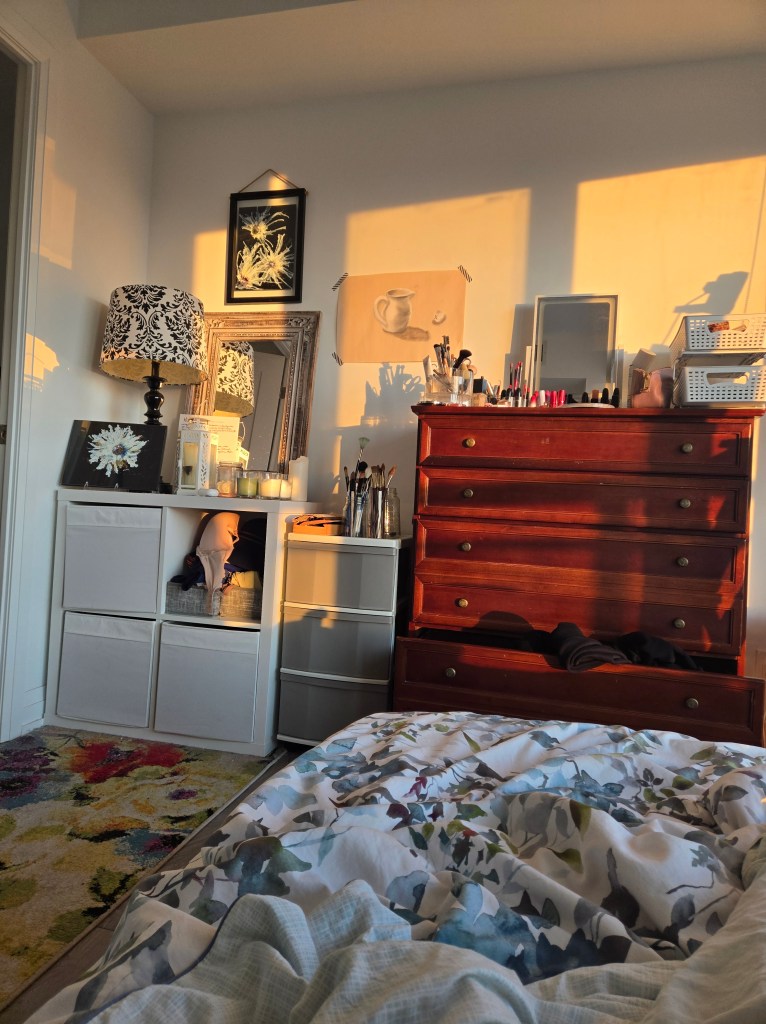
    The world itself had not changed. Morning light still crossed the bedroom wall. The train still arrived at the platform. Cake still cooled on the counter. The lake was still the lake.

    What had changed was the quality I found myself recognizing within those ordinary moments.

    Not simply beauty.

    Goodness.

    Not goodness as virtue. Not goodness as niceness.

    Goodness as right order. A life no longer bargaining with reality.

    For most of my life, hallelujah wasn’t part of my vocabulary.

    It belonged to other people. Other traditions. Other rooms. If someone had asked me to describe my own life, I don’t think the word would have occurred to me.

    Then, without trying to use it, I noticed it appearing.

    Not in church. Not only while singing. Not after some dramatic answer to prayer.

    But standing in my kitchen. Putting my phone down. Walking to the train. Realizing a cycle had quietly come to an end.

    The word arrived before I had decided whether it belonged there.

    It simply escaped ~

    “Hallelujah.”

    Not because something extraordinary had happened.

    Because something quietly, unmistakably good had.

    What ordinary moments in your life deserve a hallelujah?
  • Oh…My Goodness

    “Oh my goodness!”

    We usually hear it as an expression of surprise.

    One day I found myself hearing it differently.

    Not as an exclamation. As a recognition.

    My goodness.

    Not my achievements. Not my personality. Not my reputation.

    My goodness.

    The possibility that goodness is not something we manufacture, but something we uncover.


    We use the word goodness all the time.

    Goodness gracious.

    A good person.

    A good life.

    The word slips easily into conversation, yet we rarely stop to ask what it means.

    Not useful.

    Not successful.

    Not authentic.

    Good.

    In springtime of this year I attended a silent writing retreat.

    The facilitator wasn’t remarkable because she was entertaining or unusually gifted. She didn’t offer a revolutionary idea or a clever framework that I rushed to participate in.

    What stayed with me was something much quieter.

    She seemed good.

    Not in the thin sense of being polite, nice, or agreeable.

    There was a coherence to her.

    The music she chose.

    The stories she told.

    The pace of the retreat.

    The way she listened.

    The way she spoke.

    Nothing felt manufactured. Nothing competed for attention. Her life seemed ordered around something I couldn’t quite name.

    I left the retreat thinking less about what she had taught than about what I had witnessed.

    It raised a question that has stayed with me ever since.

    What is genuinely good?

    Not what is fashionable. Not what is efficient. Not what is biblical or holy. Not what makes me feel important. Not even what I happen to want.

    What is genuinely good?

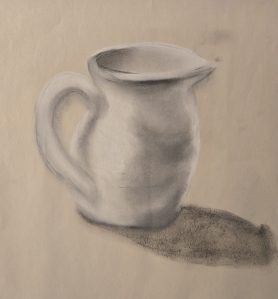
    During one exercise she invited us to imagine ourselves as a water jug.

    The invitation was simple.

    Empty it.

    The image has stayed with me.

    Not because it was psychologically insightful, but because it stands in direct opposition to the story most of us have absorbed about change.

    We imagine that growth comes through accumulation.

    Read another book, learn another skill, strengthen another habit, collect another insight.

    Become more.

    The jug suggests something different.

    Perhaps what matters most is not what we add, but what we remove.

    That same idea appears in another image often attributed to Michelangelo.

    The sculpture already exists within the marble.

    The sculptor does not create it by addition.

    He reveals it by removing everything that does not belong.

    The jug and the marble tell the same story.

    Goodness is revealed by subtraction, not by addition.

    That is a very different vision of formation.

    It suggests that goodness is not manufactured through self-improvement. It is uncovered as the things that obscure it are gradually removed.

    Noise.

    Fantasy.

    Resentment.

    Performance.

    The need to use words to explain ourselves.

    The endless pull of distraction.

    Not because these things are the whole of who we are, but because they crowd out what is quieter, steadier, and more true.

    Once I began thinking this way, another realization followed.

    Every life is already organized around something.

    Some lives are organized around achievement.

    Others around romance.

    Others around comfort, security, recognition, or pleasure.

    None of these choices happen all at once.

    They are built gradually through ordinary decisions.

    The books we read.

    The conversations we linger in.

    The music we replay.

    The people we admire.

    The way we spend a Saturday afternoon.

    Over time they form an architecture.

    We often think of morality as a list of rules.

    I have begun to think of it as architecture instead.

    Every repeated choice places another stone.

    Every habit reinforces a structure.

    Every form of attention shapes the kind of person we are becoming.

    The question is not whether a life has a moral architecture.

    Every life does.

    The question is what that architecture has been built around.

    That question has become one of the central questions of this residency.

    Not, What do I want?

    Wants matter, but they are easily shaped by fear, exhaustion, loneliness, culture, and habit.

    Plus, our desires change, don’t they? Often. 

    So instead, a deeper question remains.

    What is genuinely good?

    And once goodness is recognized, another question follows naturally.

    How should a life be ordered around it?

    Perhaps that is what obedience really is.

    Not the relentless addition of more disciplines, more knowledge, or more effort.

    The patient work of removing whatever obscures goodness, and then building an ordinary life around what remains.


    Look carefully. What is already shaping the architecture of your life?

  • How Do I Know This Life Is Real?

    Some lives produce a great deal of evidence.

    Photographs.

    Announcements.

    Promotions.

    Relationships.

    Trips.

    Milestones.

    Stories.

    The evidence accumulates naturally. A person can point to what happened and where they were when it happened. Others can confirm it. The life enters the record.

    Other lives are harder to verify.

    A friendship deepens.

    A prayer becomes habitual.

    A boundary is held.

    A nervous system regulates.

    Attention changes.

    Desire fades.

    This evidence is difficult to photograph.

    No obvious event marks the transition. Nothing appears to happen. Yet something has happened.

    A great deal of modern life is organized around evidence. Not because people are shallow. Because evidence is reassuring.

    It answers questions.

    Am I moving forward?

    Am I loved?

    Am I interesting?

    Am I succeeding?

    Am I becoming someone?

    Evidence reduces uncertainty. It provides proof that life is occurring. The difficulty is that evidence and reality are not the same thing.

    Some changes are easy to explain.

    A glow-up.

    A move.

    A new relationship.

    These changes come with something to report. They can be photographed, announced, measured, introduced, or described.

    Other changes are harder to explain.

    Trust.

    Discernment.

    Forgiveness.

    Friendship.

    Wisdom.

    Patience.

    Self-respect.

    The enjoyment of solitude.

    These changes may alter the whole structure of a life, but they do not always give a person a clean update to offer when someone asks what is new.

    This is where the confusion begins.

    The easiest changes to explain can start to feel like the most important ones.

    A packed calendar can look like progress.

    Dinner reservations, flight confirmations, weekend plans, and group photos can make a life appear to be moving.

    Recognition can look like confirmation that the life is on the right track.

    Compliments.

    Invitations.

    Congratulations.

    “You seem so happy.”

    The response can become more persuasive than the actual condition of the life.

    However, many of the most consequential changes produce very little evidence while they are happening.

    They do not announce themselves.

    They do not arrive with witnesses.

    They often become visible later, through what a person is now able to do.

    The ability to remain present produces little documentation.

    So does telling the truth.

    So does resisting compulsion.

    So does staying when running would be easier.

    A person learns not to send the text.

    A person learns not to explain themselves.

    A person learns to leave when staying would require self betrayal.

    A person does not become discerning on the day they walk away from the wrong relationship.

    The discernment was forming months or years earlier.

    The breakup is simply the visible consequence.

    A person does not become patient on the day they remain calm during an argument.

    The patience was formed long before it was required.

    The argument merely revealed it.

    A person does not become a friend on the day they sit beside someone in silence.

    The friendship was built elsewhere.

    The silence simply makes it visible.

    What appears sudden from the outside is often the result of a long invisible process.

    The visible event is not always the change.

    Often, it is the first piece of evidence that the change has already occurred.

    This creates a peculiar problem.

    When a life becomes quieter, slower, less performative, and less visible, the usual forms of proof begin to disappear.

    There are fewer stories to tell.

    Fewer updates to give.

    Fewer milestones to report.

    The question arrives almost automatically:

    Is anything actually happening?

    The question sounds practical.

    It is actually perceptual.

    What forms of change do I recognize, and which ones do I overlook because they leave no record?

    The inner life is often asked to prove itself using measures it does not naturally produce.

    It may not offer a milestone.

    It may not create a story.

    It may not produce a visible achievement.

    Sometimes it appears only as less.

    Less noise.

    Less urgency.

    Less performance.

    Less need to demonstrate.

    Less reaching for what no longer has authority.

    The reduction can be mistaken for stagnation.

    The quiet can be mistaken for absence or dullness.

    The ordinary can be mistaken for mediocrity.

    The absence of evidence can be mistaken for the absence of change.

    But scarcity of evidence and scarcity of reality are not the same condition.

    A life may be heavily documented and lightly inhabited.

    A life may be lightly documented and deeply inhabited.


    What forms of change do you recognize, and which ones do you overlook because they leave no record?

    A canoe trip. Algonquin Park, sunset.